


This post is the sixth in my series, “Don’t Be Afraid to Obey.” You can read this on its own, but I recommend starting here.
“For in this way in former times the holy women also, who hoped in God, used to adorn themselves, being submissive to their own husbands; just as Sarah obeyed Abraham, calling him lord, and you have become her children if you do what is right without being frightened by any fear.” - 1 Peter 3:5-6
Special note: In this series, I am addressing wives of good men, not abusive manipulators - but do not be quick to put your husband in that category. If you think your husband is, you should be speaking with the elders of your church.
Becoming Trustworthy
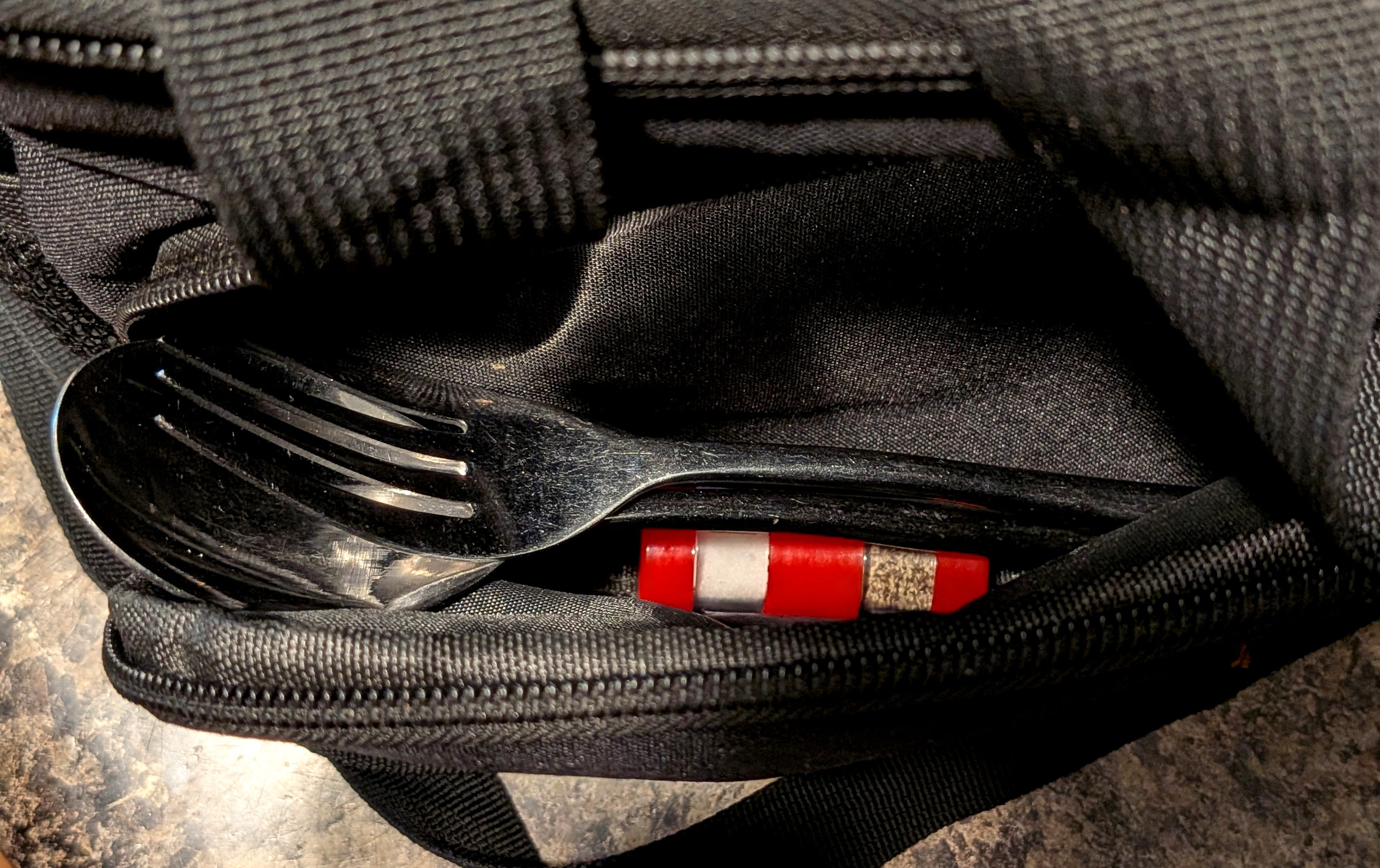
At 7:40 pm, a reminder pops up on my phone. It’s been there long enough now that I know the time when I hear it, even though the sound isn’t unique.
“Put silverware in Parker’s lunchbox.”
I don’t know why that time is helpful. By then I’ve already unloaded it and I don’t usually load it again until the morning.
It doesn’t matter, though. I never use it. Mostly it just alerts me that bedtime is coming. It’s a lingering reminder of the not-so-distant past, when day after day I would forget things Parker wanted.
It could be regular, like Parker warming up his lunch and finding no fork to eat it with, or unusual, like reminding me for the third time to buy new soap dispensers. Over and over again, I would fail, leaving my husband with the choice of either making up for my lack or informing me that I had - once again - failed him.
His heart could not safely trust me. Perhaps, in some theoretical sense, he trusted that my desires were good. But practically, it was mostly meaningless.
“I don’t think you are trying to lie,” he told me. “But I think you deceive yourself a lot.”
In fact, until writing this post I don’t think I realized how untrustworthy I was. So often I would fail to do the things Parker asked me to. He never knew if I would remember to do something or if I would bother to do it even if I did.
We worked hard on this, both of us. I began to be more consistent. My reminders to write things down and put in silverware became just gentle reminders to keep prioritizing what my husband wanted.
However, as our marriage improved, we began to see something was off. Sometimes Parker would make a big deal about something, and I would be confused. Why didn’t you just tell me? I’d ask. Why are you acting like this is a big deal? I’d try to explain what I was doing or troubles I had, and he would tell me I was complaining. I would get so frustrated with how Parker was dealing with things. Most of the time, things went well - but then randomly it felt like we were back where we started. I began to be discouraged that we would never escape this.
One day in the midst of an argument, I realized Parker didn’t trust me. And I began to realize I didn’t really trust him.
It was painful to admit, but it made sense for him not to trust me. I had taught him that if he wanted me to do something, he had to make a big deal about it. If he casually mentioned he’d like me to start doing something, I wouldn’t do it, or I’d forget about it at best. Usually I made excuses for why it wasn’t a good idea. I argued with his decisions a lot. This had been the norm for so long, and changing it was so difficult and slow, that it was difficult for him to realize that things were different and the occasional failure or question didn’t mean there was a major issue.
I had to remind him that I was on his side. And I had to make sure that I actually was.
I knew theoretically that I need to show that I am trustworthy by following my husband whenever I can. I needed to learn to do it, practically.
Proverbs 31 describes a virtuous wife:
The heart of her husband safely trusts her;
So he will have no lack of gain.
She does him good and not evil
All the days of her life.
When you demonstrate a willingness to listen and follow when it’s not to your advantage or according to your will, you build a relational background that makes it so your husband safely trusts you. When you do speak to oppose him, he knows it’s not just because you don’t enjoy what he’s saying or you want to be right.
It’s like a child who lies - even when he isn’t lying, his behavior often looks the same as when he does. It’s difficult to ever trust him. But when a child demonstrates a willingness to tell the truth even to his own disadvantage, you trust him, even if he appears to be wrong.
Remember Sarah. She obeyed Abraham, even when he put her in danger and asked her to be deceptive, and God blessed her and protected her. Her obedience to her husband was messy, and yet God puts her forth in Scripture as an example to follow. In all the crazy things Abraham does, the only record we have of her disagreeing with Abraham about what to do is in the matter of sending Hagar and Ishmael away, and God Himself tells Abraham she’s right!
We want to make it easy for our husbands to trust us.
If it’s not, God can work in you. Occasionally, I still forget the silverware until the last moment. I’m growing, but I’m not ever going to be perfect. Nevertheless, my goal is for my husband to trust me safely. Not imprudently merely because he loves me, but because it is a safe thing to do. I hope that my occasional failure doesn’t keep that from being true.
This does mean that humility and a willingness to repent and be corrected when I do fail is essential. Some of King David’s sins were worse than Saul’s. But we trust David, because he repented every time he was confronted with his sin, and we don’t trust Saul, because he always made excuses.
Ask yourself honestly, is it reasonable for my husband to trust me?
And as for me, I had to learn to trust his intentions.
There are two parts to trust like Sarah: being a trustworthy wife, and trusting your husband. We’ll look at the second part next week.